
What Is WPC? The Complete Guide to Wood Plastic Composite
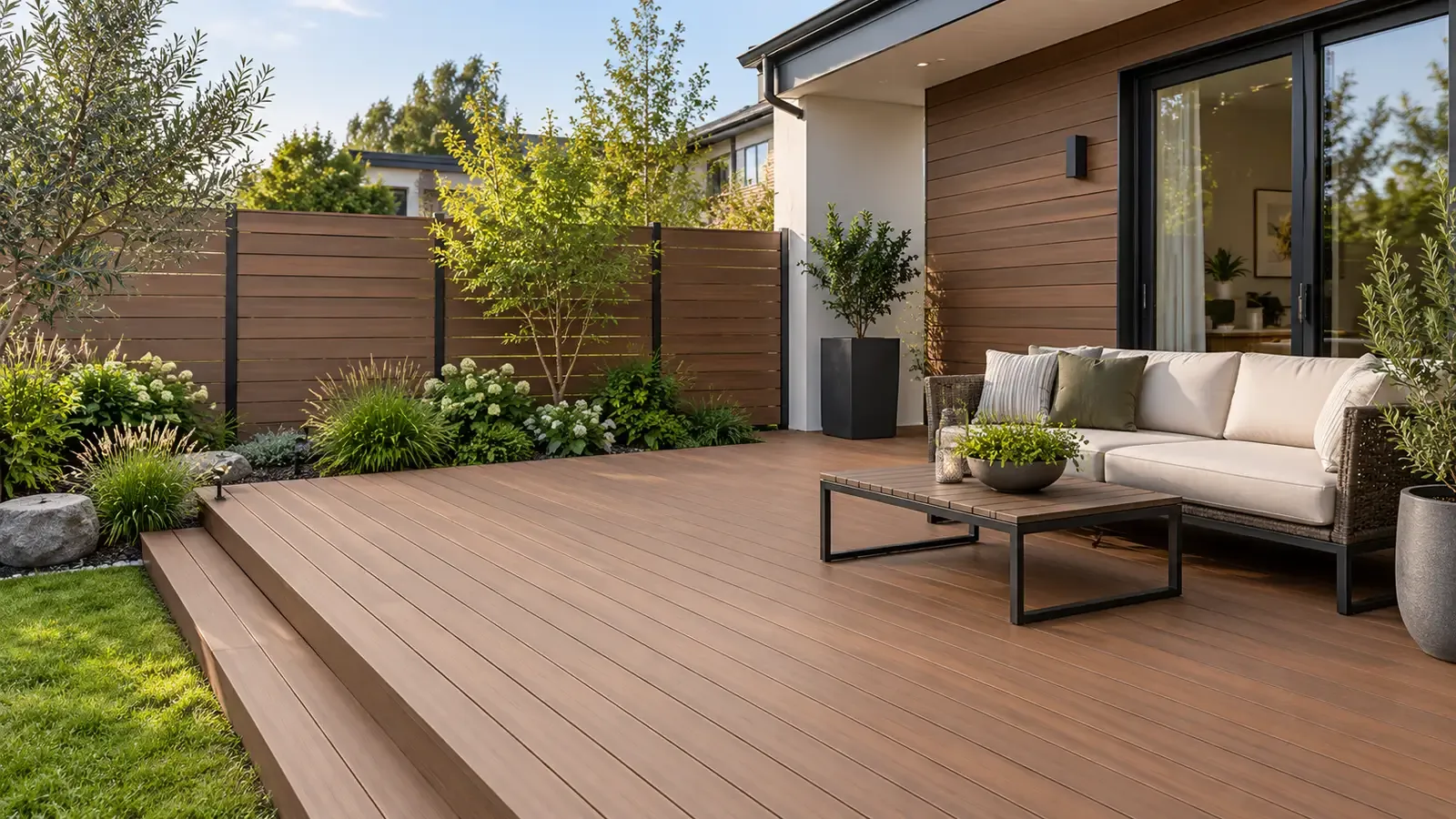
Quick answer: WPC (wood plastic composite) is a building material made by blending wood fiber with plastic and a small share of additives, then extruding the mix into boards and profiles. It looks like wood but does not rot, splinter or need painting, which is why it is widely used for decking, fencing, cladding and interior wall panels.
If you have shopped for a deck, a garden fence or a modern wall panel in the last few years, you have almost certainly met WPC. Some brands call it composite decking. Others call it wood-plastic, eco-wood or artificial wood. They all describe the same family of materials.
This guide explains what WPC is made of, how it is produced, the main types on the market, where it works best, and how to tell a good board from a poor one. It is written from the factory side. We make WPC every day, and we will be honest about both its strengths and its limits.
What Is WPC Made Of?
WPC has three ingredient groups: wood fiber, plastic and additives. A typical first-generation formula is around 60% wood fiber, 30% plastic and 10% additives. Exact ratios vary by manufacturer and product, and that variation is a big reason why two “WPC” boards can perform very differently.
| Ingredient | Typical share | What it does |
|---|---|---|
| Wood fiber (wood flour) | ~50–60% | Gives the natural look, stiffness and the warm feel underfoot |
| Plastic (usually recycled PE, sometimes PVC) | ~30–40% | Binds the fiber, keeps water out, makes the board rot-proof |
| Additives | ~5–10% | UV stabilizers, pigments, coupling agents, lubricants and anti-mold agents |
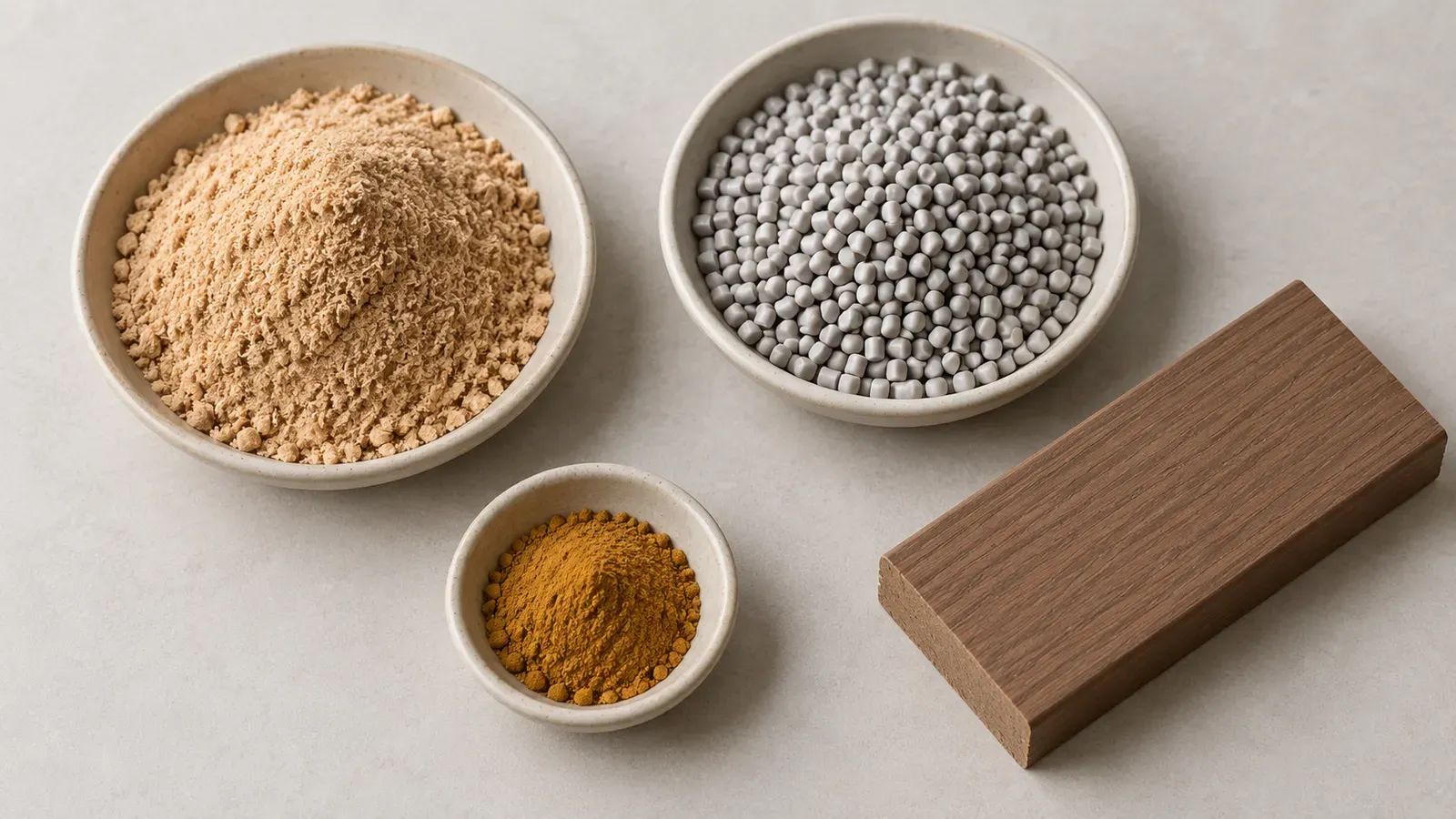
Wood fiber
The wood component is usually fine wood flour or fiber from sawmill and furniture-factory by-products, ground and dried before use. It is not cut from new logs. Moisture control here matters a lot: fiber that is not dried properly leads to bubbles and weak spots inside the board.
Plastic
Most outdoor WPC uses high-density polyethylene (HDPE), much of it recycled from packaging and industrial film. Some products, especially interior wall panels, use a PVC base instead. The plastic wraps every wood particle, which is what keeps water and insects out. HDPE vs PVC-Based WPC
Additives
Additives are a small share of the recipe but they decide how the board ages. UV stabilizers slow fading. Inorganic pigments hold color better than organic ones. Coupling agents help wood and plastic bond, and anti-mold agents protect against mildew in damp climates. Good factories adjust the additive package for the climate the boards are going to.
Is WPC eco-friendly?
In a typical formula, the large majority of raw material is recycled or reclaimed: sawmill waste on one side, post-industrial and post-consumer plastic on the other. A WPC deck also needs no oil, stain or paint during its life. That said, WPC is not biodegradable, so the best end-of-life route is recycling it back into new composite. Is Composite Decking Eco-Friendly?
How Is WPC Made?
WPC boards are made by extrusion: the blended material is melted and pushed through a shaped steel die, much like pasta through a press. The process has six main steps.
- Drying the wood fiber. The fiber is dried to a very low moisture content. Wet fiber causes bubbles and weak boards.
- Mixing and compounding. Fiber, plastic and additives are blended at high temperature and turned into uniform granules.
- Extrusion. The granules are melted again and forced through a die that sets the profile: a hollow deck board, a solid board, a fence slat or a fluted panel.
- Co-extrusion (capped boards only). A second extruder wraps a thin protective plastic shell around the core in the same pass.
- Cooling and cutting. The profile runs through a water-cooled sizing table and is cut to length, commonly 2.2 m to 5.8 m.
- Surface finishing. Boards are brushed, sanded, grooved or embossed with wood grain, then inspected and packed.


Types of WPC
The biggest difference between WPC products is whether the board has a protective shell. After that, buyers choose by profile shape and surface finish.
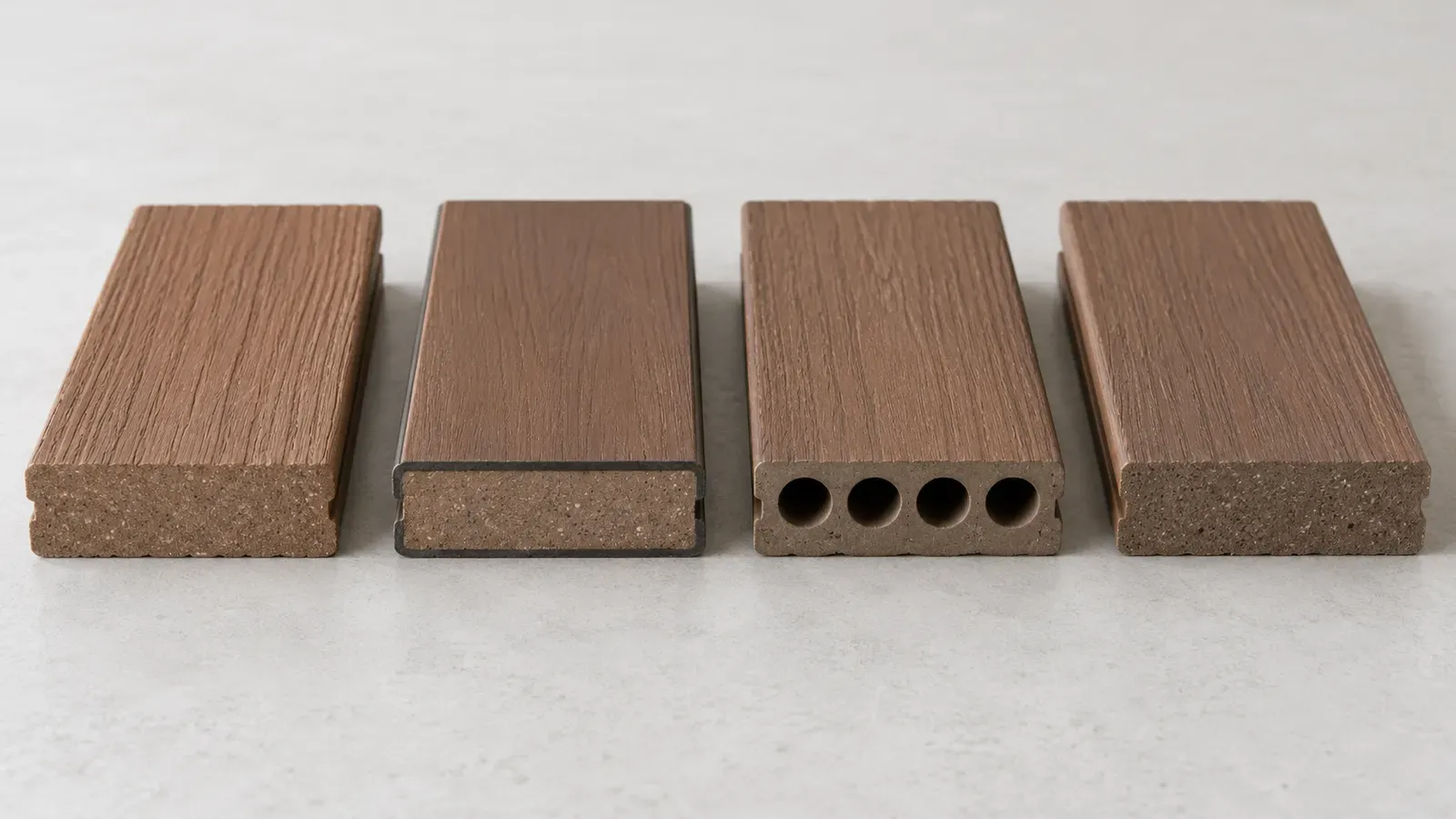
First-generation vs co-extruded (capped) WPC
First-generation (uncapped) WPC is a single uniform material from surface to core. It has a strong, natural wood feel and costs less. Because wood fiber sits at the surface, it absorbs more water and oil, so stains are harder to remove and color changes more in the first year.
Co-extruded (capped) WPC has a modified plastic layer wrapped around the core, often on all four sides (“360° capped”). Factories add extra UV inhibitors and higher-grade pigments to this layer. The result is better fade resistance, better water and stain resistance, and much easier cleaning. Most new outdoor projects in the US, UK and Europe now choose capped boards. Capped vs Uncapped Composite Decking Co-extruded Decking Explained
| First-generation (uncapped) | Co-extruded (capped) | |
|---|---|---|
| Surface | Wood fiber + plastic | Protective plastic shell |
| Look and feel | More natural, matte, “woody” | Sharper grain, wider color range |
| Stain resistance | Moderate; oil soaks in | High; wipes clean |
| Fading in year one | Noticeable, then settles | Minimal |
| Price | Lower | Higher |
| Best for | Budget projects, shaded areas, fencing | Decks, pool areas, high-traffic and sunny sites |
Hollow vs solid boards
Hollow boards are lighter, cheaper to ship and quicker to install, and they work well for most residential decks. Solid boards are heavier and stronger, hold screws better and suit commercial areas, docks and spots with heavy furniture. Hollow vs Solid Composite Decking
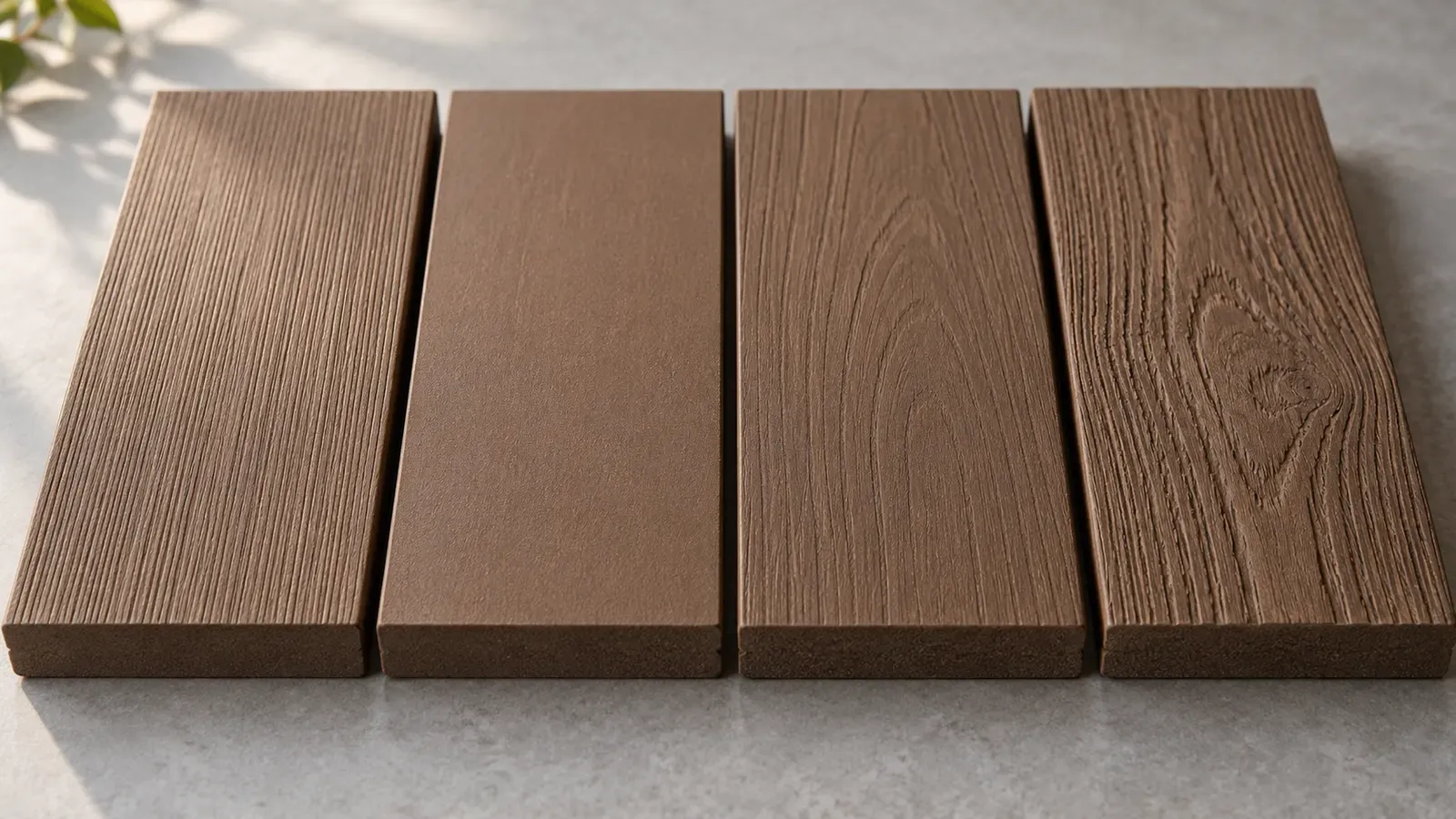
Surface finishes
Common finishes include brushed, sanded, fine grooves, wood-grain embossed and deep 3D embossed grain. Deeper embossing looks more like real timber and adds slip resistance, while a smooth sanded finish gives a cleaner, modern look.
Where Is WPC Used?
WPC started as a decking material, but today the same technology produces a full range of outdoor and indoor products.
| Application | Typical products | Why WPC fits |
|---|---|---|
| Decking | Deck boards, stair treads, fascia, skirting | No splinters, no rot, no annual staining |
| Fencing and gates | Slat fences, privacy panels, gates | Stays straight, no painting, matches the deck |
| Railing | Composite or aluminum-and-WPC railing | Low maintenance, coordinated colors |
| Garden structures | Pergolas, planter boxes, garden edging | Resists moisture and soil contact |
| Exterior walls | Wall cladding, louvers, facade screens | Warm wood look without timber upkeep |
| Interior walls and ceilings | Fluted wall panels, ceiling panels, baffles | Fast click-in installation, moisture resistant |
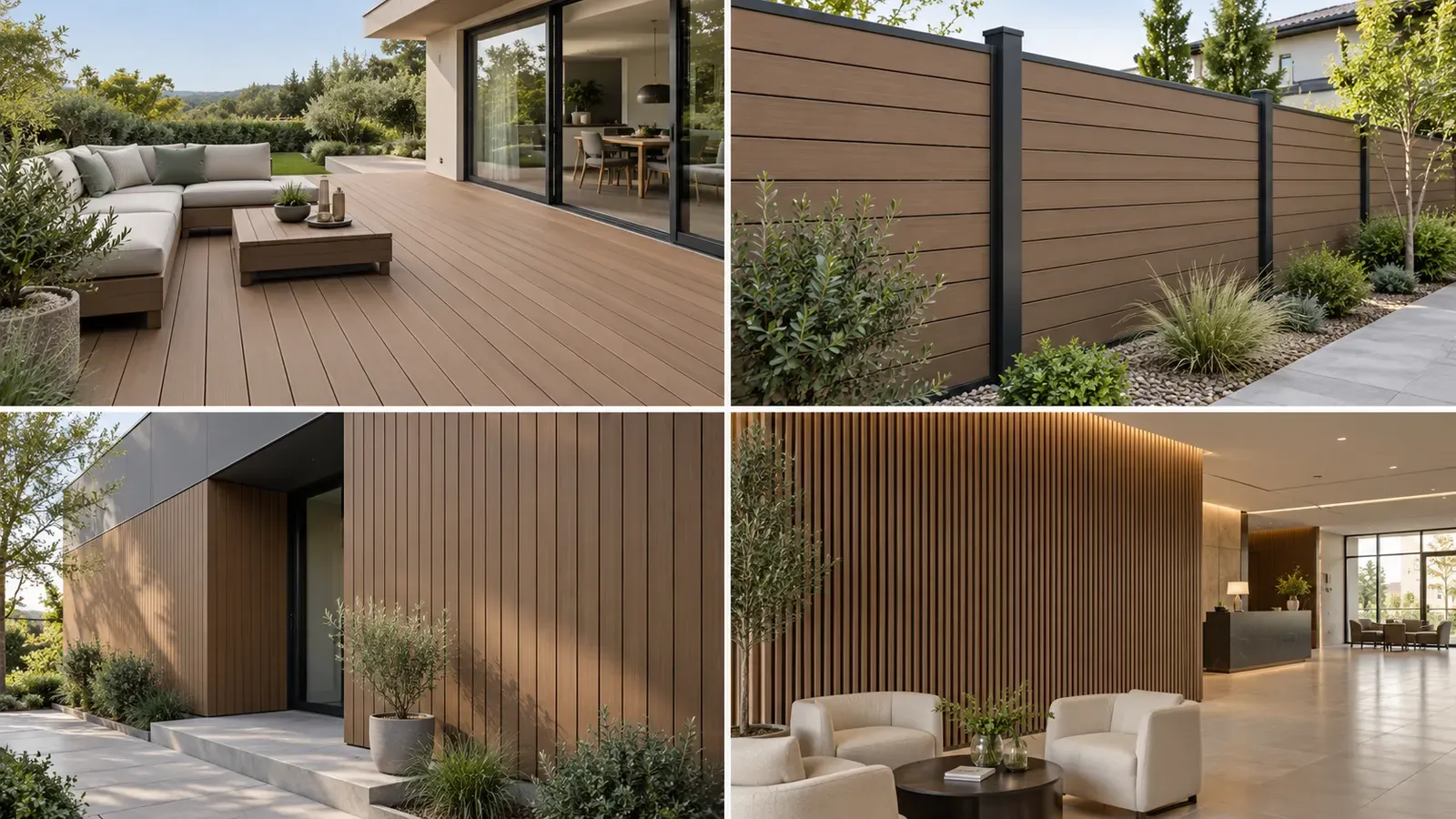
Links to explore: Decking Fencing Wall & Ceiling
Pros and Cons of WPC
WPC is not perfect, and it is better to know its limits before you buy. Here is an honest summary.
| Pros | Cons |
|---|---|
| Does not rot, crack or splinter like timber | Higher upfront price than pressure-treated pine |
| No sanding, staining or painting | Expands and contracts with temperature, so gaps are needed |
| Resistant to termites and insects | Darker colors get warmer in direct summer sun |
| Consistent color and straight boards | Uncapped boards fade and stain more easily |
| Long service life, often 20+ years for quality capped boards | Not as stiff as hardwood; needs the right joist spacing |
| Made largely from recycled materials | Quality varies a lot between manufacturers |
WPC vs Wood vs PVC
Buyers usually compare WPC with two alternatives: natural or treated timber, and all-plastic PVC.
| WPC (capped) | Treated / hardwood timber | PVC | |
|---|---|---|---|
| Material | Wood fiber + plastic | Natural wood | 100% plastic |
| Upfront cost | Medium | Low (treated pine) to high (hardwood) | Medium to high |
| Yearly upkeep | Wash only | Oil, stain, insect treatment | Wash only |
| Rot and insects | Resistant | Vulnerable without treatment | Immune |
| Feel | Solid, wood-like | Natural | Lighter, more “plastic” |
| Outdoor durability | High | Depends on species and care | High, but more expansion |
| Best for | Decks, fences, cladding | Traditional looks, tight budgets | Wet areas, interior panels |
Why does composite cost more than treated wood?
Pressure-treated timber is cheaper to buy, but it needs regular oiling, staining and insect treatment, and it may need board replacement within 10 years. Premium hardwoods that match WPC’s durability often cost more than composite. Over the life of a deck, WPC is usually the lower total cost. Composite vs Wood Decking
WPC panels vs PVC panels
Fluted wall panels in WPC and PVC can look almost the same. PVC panels are lighter and cheaper but more brittle, and they are mainly for indoor use. WPC panels are denser and work both indoors and outdoors because the formula is upgraded for color fastness, weathering and impact resistance, which is also why they cost more. WPC vs PVC Decking
How Does WPC Perform in Real Life?
These are the questions importers and homeowners ask us most often. The short answers are below; each topic has its own detailed guide.
Does WPC fade?
Yes. Almost every outdoor material changes color in the sun, and WPC is no exception. How much depends on three things: whether the board is capped, which pigments are used, and the local climate.
In our experience, uncapped boards can lighten noticeably in the first year, often in the 10–30% range, and then stay stable apart from surface dirt. Co-extruded boards carry extra UV inhibitors and high-grade inorganic pigments in the shell, which keeps first-year change to around 5% before the color settles. Colors made with organic pigments fade more than those made with inorganic pigments, so a reliable factory uses mainly inorganic pigments for outdoor colors. Does Composite Decking Fade?
Does WPC expand and contract?
Yes. Because WPC contains plastic, it grows slightly in heat and shrinks in cold. This cannot be removed, but it can be controlled. Quality stabilizers keep the expansion coefficient in a sensible range, and correct installation does the rest: leave the end and side gaps the installation guide specifies, and use the recommended clips and joist spacing. How Much Expansion Gap Does Composite Decking Need?
Is WPC stain resistant?
It depends on the type. On uncapped boards, wood fiber at the surface can absorb oil, so grease from a barbecue may leave a mark. These boards are still easier to clean than real wood: rinse dust with water, and clean fresh oil or ink with hot soapy water as soon as possible. Capped boards have a plastic shell over the core, so oil and wine stay on the surface and wipe off easily. How to Clean Composite Decking
Can you paint or stain WPC?
We do not recommend it. WPC is colored through the material by pigments, so it never needs paint. Paint also tends to peel from the plastic surface and adds chemicals that undo the low-maintenance benefit. If you want a different color, choose it at the ordering stage; many factories, including ours, can match custom colors for larger orders.
Can WPC handle heat and humidity?
Quality WPC is used from Northern Europe to the Middle East and Southeast Asia. Lower-grade boards, however, can warp, bend or change length under high heat and humidity. The answer is the right formula and the right profile for the climate. Tell your supplier where the boards will be installed: a good factory will recommend suitable profiles and sizes, and can fine-tune the formula for extreme climates. Composite Decking for Hot & Humid Climates
Why does the cap layer sometimes peel off?
Shell delamination is the most serious defect in co-extruded WPC. It has two main causes:
- Immature production control. Co-extrusion needs a precise formula, temperature and line speed. Small factories that cut corners here produce weak bonds.
- Different movement between shell and core. The shell and core expand at different rates. If the bond is weak, large temperature swings slowly pull the shell loose.
Shell thickness matters too, but thicker is not always better. A shell that is too thin wears through or bursts when the core absorbs water. A shell that is too thick shrinks more than the core and can bend the board. Most experienced manufacturers aim for roughly 0.5–1.0 mm.
How to Judge WPC Quality
Two boards can look identical in a showroom and perform very differently after two summers. Building materials are hard to judge by eye, so look for evidence instead.
- Check the cross-section. The core should be dense and even, with no bubbles, cracks or loose fiber. On capped boards, the shell should be even and firmly bonded all the way around.
- Ask for third-party test reports. Reliable suppliers test representative models with independent labs such as SGS or Intertek. Ask which standard was used: EN 15534 is the main European standard for wood-plastic composites, and ASTM D7032 is the reference in North America. WPC Standards Explained
- Ask how each batch is tested. A serious factory runs its own lab checks on every production batch, not only once for a certificate.
- Ask about the formula, not just the price. The easiest way to cut WPC cost is to change the formula: more filler, less virgin-quality plastic, fewer UV additives. The board looks the same on delivery and fails years later.
- Check the warranty in writing. Warranty terms usually differ by product series. Ask for the warranty document before ordering and read what it covers: fading, staining, structural failure, or all three.
- Inspect before you order. Visit the factory or ask for a live video tour of the production lines and QC process. How to Test WPC Quality
From the Factory: How We Test SungemWPC Boards
At our factory in Anhui, China, quality checks are built into every batch.
- Boiling and freezing cycle: sample boards are boiled for 48 hours, then frozen at −20°C for 48 hours, repeated three times. Boards must show no swelling, cracking or shell separation.
- Density, water absorption and bending strength checks against our internal standard.
- Color checks against the master sample under standard light.
- Shell thickness and bonding checks on every co-extruded order.
“After more than 13 years exporting building materials to over 60 countries, I have learned that the cheapest quote is rarely the cheapest deck. Ask your supplier how they test, and ask to see it.” — Lucy Yang, Founder, SungemWPC
Frequently Asked Questions
What does WPC stand for? WPC stands for wood plastic composite, a material made of wood fiber, plastic and additives. It is also called composite decking, wood-plastic or artificial wood.
How long does WPC last? Quality capped WPC typically lasts 20 years or more outdoors with only basic cleaning. Life depends on the formula, the shell quality and correct installation. How Long Does Composite Decking Last?
Is WPC waterproof? WPC is highly water resistant and does not rot, which is why it is used around pools and on docks. Uncapped boards absorb a little moisture at the surface; capped boards absorb very little.
Is WPC better than wood? For most outdoor uses, yes: it needs no staining, does not rot or splinter, and costs less over its life. Real wood still wins on natural character and lower upfront cost for treated pine.
Does WPC get hot in the sun? All decking warms up in direct sun, and dark colors get hotter than light ones. Choosing lighter colors for sunny, barefoot areas such as pool decks helps. Does Composite Decking Get Hot?
Can WPC be used indoors? Yes. WPC fluted wall panels and ceiling panels are popular for living rooms, hotels, offices and shops because they install quickly and resist moisture. Wall & Ceiling
Ready to See WPC for Yourself?
Photos only tell part of the story. Hold a board, check the cross-section and compare the finish in your own light.