
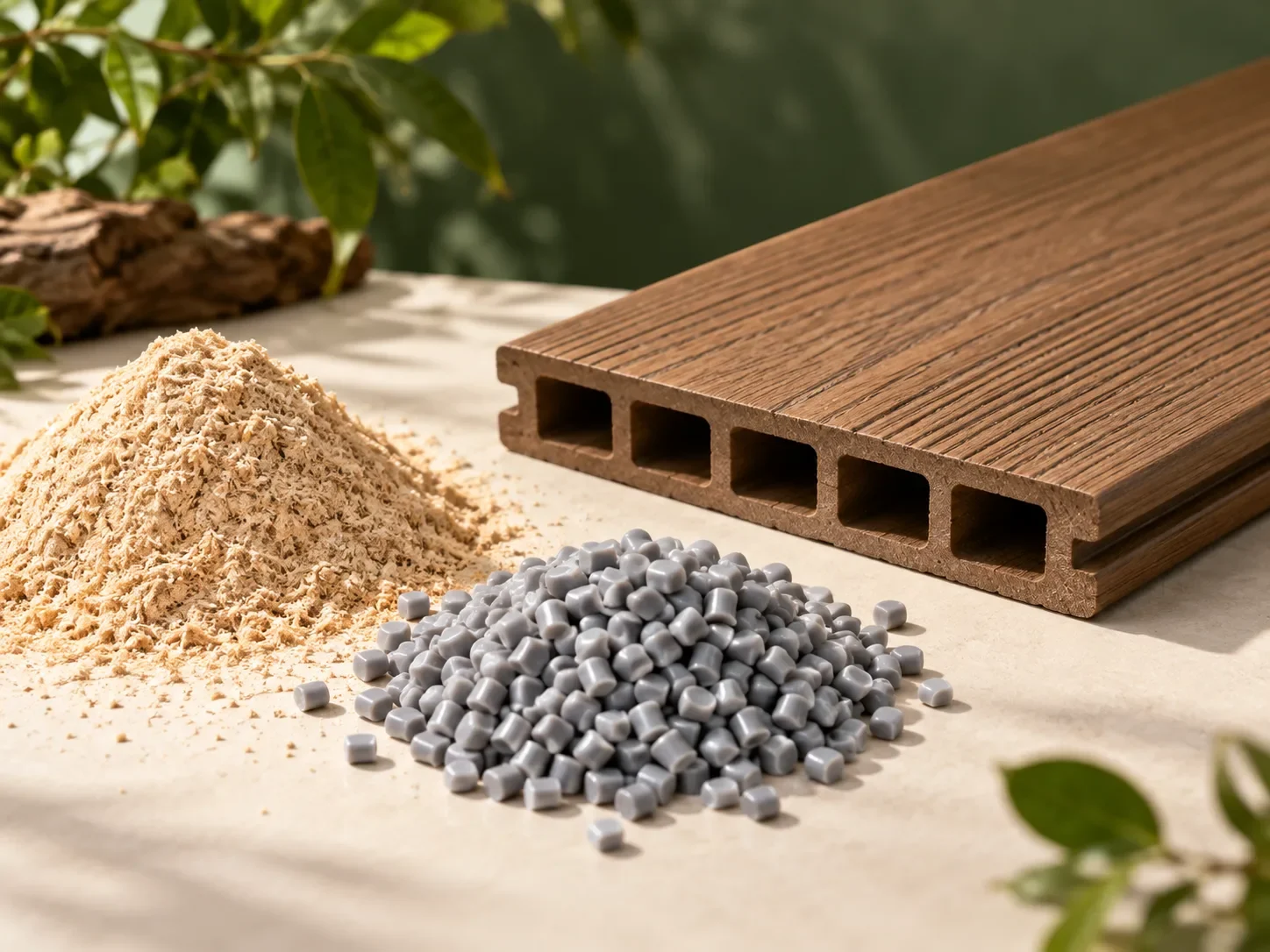
01 / THE MATERIAL JOURNEY
From waste stream
to finished board
See where reclaimed inputs and production offcuts can fit into the composite manufacturing process.
Reclaim
Start with suitable wood fibre and polymer inputs. Confirm their source and composition for the chosen product.
Blend
Combine fibre, polymer, colour and additives around the agreed performance requirements.
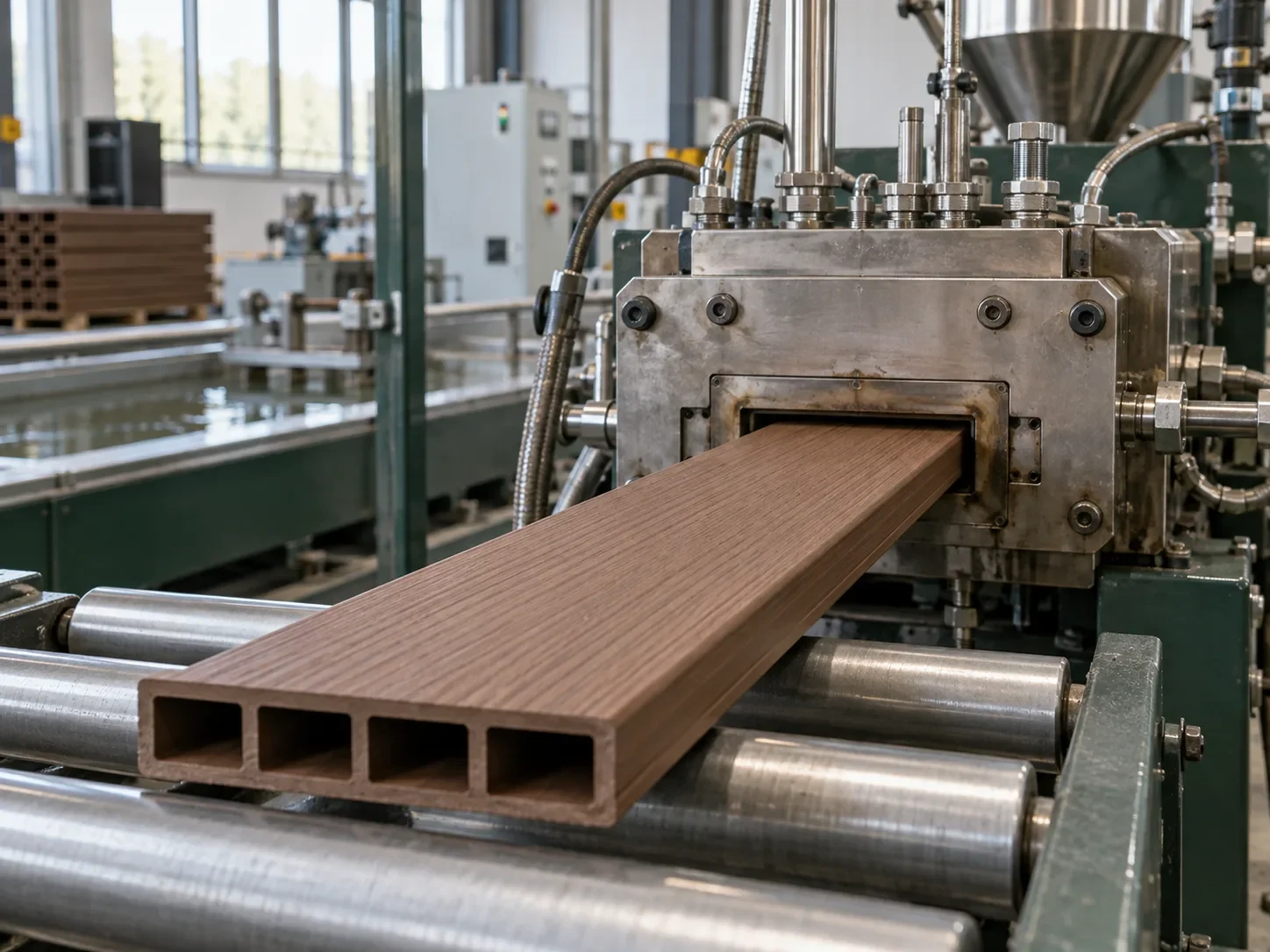
Extrude
Shape the compound into boards and profiles for the intended application.
Regrind
Assess suitable production offcuts for recovery, subject to formulation and quality requirements.
02 / THINK BEYOND DAY ONE
Consider the whole life
of your project
Compare materials across sourcing, maintenance and recovery. A meaningful environmental comparison needs product-specific evidence.
| What to consider | SungemWPC composite | Pressure-treated wood | Tropical hardwood |
|---|---|---|---|
| Raw material | Wood fibre and polymer blend; request the formulation’s source information. | Timber; check the species, source and treatment. | Timber; species and responsible sourcing matter. |
| Chemical treatment | Check the formulation and relevant substance documentation. | Preservative treatment is part of the material specification. | Treatment and finish depend on species and use. |
| Upkeep | Cleaning and care according to the selected board’s instructions. | Cleaning, coating and maintenance according to the supplier’s guidance. | Cleaning and, where specified, oiling to maintain the desired appearance. |
| Durability | Depends on the profile, application, installation and exposure. | Depends on treatment, moisture management and maintenance. | Depends on species, installation, exposure and maintenance. |
| End of life | Check specialist collection and processing options locally. | Follow local rules for treated timber. | Reuse or recovery depends on condition and local facilities. |

03 / A PRACTICAL COMMITMENT
Four ways we
build responsibly
Responsible materials
Ask where inputs come from and confirm product-specific composition.
Thoughtful production
Consider material use, production offcuts and quality together.
Informed specifications
Match substance and performance documentation to your project’s requirements.
Built for the application
Choose the right profile, installation approach and care routine for its intended use.
04 / DOCUMENTS FOR YOUR PROJECT
Certificates & test reports
These document spaces are reserved for verified files. Availability and scope must be checked for the selected product.
ISO 14001
Certificate / report pendingDocument will be added when available.
ISO 9001
Certificate / report pendingDocument will be added when available.
EN 15534 / CE
Certificate / report pendingDocument will be added when available.
ASTM D7032
Certificate / report pendingDocument will be added when available.
REACH / RoHS
Certificate / report pendingDocument will be added when available.
Fire classification
Certificate / report pendingDocument will be added when available.
Slip resistance
Certificate / report pendingDocument will be added when available.
Preparing a tender or green-building submission?
Send the document checklist from your specifier or assessor.
YOUR QUESTIONS, ANSWERED
Sustainability questions we hear most
See all FAQsIf composite contains plastic, how can it support responsible material use?
The useful questions are where the wood fibre and polymer come from, how much recycled content the specific product contains, and how it performs over its working life. Ask for product-specific composition and supporting documentation rather than relying on a general environmental label.
Can composite boards be recycled at the end of their life?
Collection and processing options depend on the formulation, condition of the boards and facilities available in your region. Ask us about the selected product and check with a local specialist before planning disposal or recycling. Do not assume acceptance through household recycling.
Does composite decking release harmful chemicals?
This needs to be assessed against the particular formulation, intended use and applicable testing. Tell us which substance or emissions requirements your project must meet so we can discuss relevant product documentation.
Can your products contribute to LEED or BREEAM credits?
Credit eligibility depends on the project, rating-system version and the documents accepted by your assessor. We can discuss the available product information with your specification team; using a product does not itself guarantee a credit.
What recycled content can you offer for private-label orders?
Share the product specification and recycled-content target with our team. Material availability, performance requirements and supporting evidence need to be reviewed together before a formulation or percentage is agreed.
LET’S BUILD YOUR NEXT PROJECT
Planning a greener project?
Tell us about your market, application and material requirements. We’ll help you plan samples, documentation and a quotation.