
How Many Boards Fit in a 40HQ? WPC Container Loading Guide
Quick answer: A 40HQ container of WPC decking is usually limited by weight, not space. In a worked example with 140 × 25 mm hollow boards weighing 2.4 kg/m and a 24-tonne cargo limit, a 40HQ carries about 10,000 linear metres (around 1,450 m² of deck), while a 20GP carries about 8,000 linear metres (around 1,170 m²). For heavy solid boards, a 20GP can carry almost as much as a 40HQ. Always confirm with your supplier’s packing list.
“How many boards fit in a container?” sounds like a simple question, but the answer depends on the board’s weight, its length, the container type and the weight limits on the route. Getting it right matters: freight is a large part of your landed cost, and a badly planned container can cost you hundreds of square metres of stock.
This guide explains how container loading works for WPC decking, with a worked example you can repeat with your own numbers. For the full import process, see How to Import WPC Decking from China.
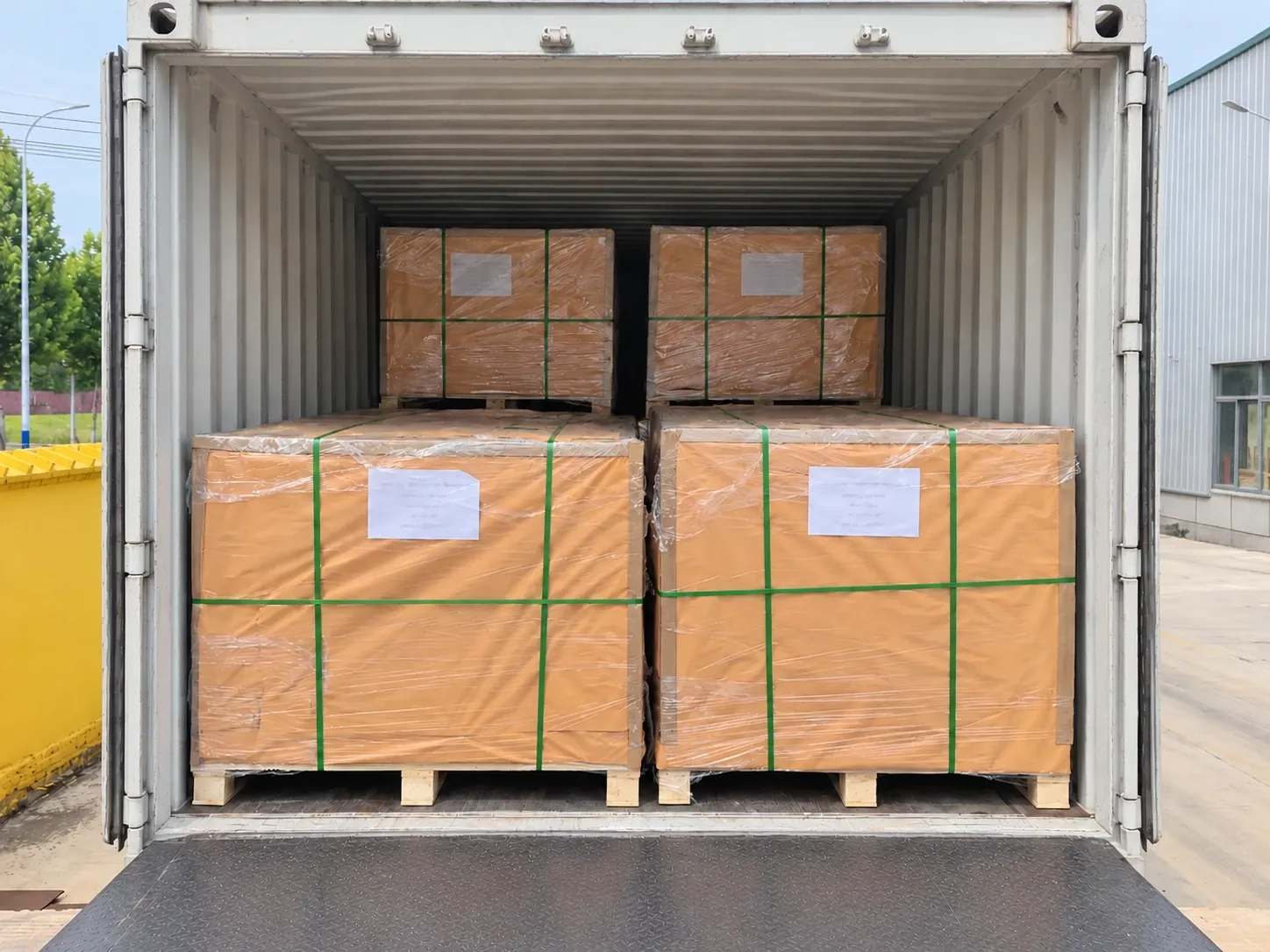
WPC decking usually reaches a container’s weight limit before it fills the space.
Container Sizes at a Glance
| 20GP (20 ft standard) | 40HQ (40 ft high cube) | |
|---|---|---|
| Approximate internal length | 5.9 m | 12.0 m |
| Approximate internal width | 2.35 m | 2.35 m |
| Approximate internal height | 2.39 m | 2.69 m |
| Approximate internal volume | 33 m³ | 76 m³ |
| Longest boards that fit comfortably | About 5.8 m | Two rows of up to about 5.8 m |
Exact dimensions and maximum payloads vary by container and shipping line. Your forwarder can confirm the figures for your booking.
Why Weight Usually Limits WPC Containers
WPC is dense. A 40HQ has more than twice the space of a 20GP, but it does not carry twice the weight. For most WPC decking, a 40HQ reaches its practical weight limit long before it is full.
Two limits apply:
- The container’s maximum payload, set by the container and the shipping line.
- Road and rail limits on the routes at both ends. In some markets, including the United States, road limits often keep a 40 ft container’s cargo to around 20 tonnes unless special permits or equipment are used.
Your forwarder should confirm the practical cargo limit for your route before the factory plans the load.
A Worked Example
To show how the numbers work, here is an example with clearly stated assumptions. Replace them with the real weight of your boards and the limit for your route.
Assumptions
- Board size: 140 × 25 mm
- Hollow board weight: 2.4 kg per metre
- Solid board weight: 3.9 kg per metre
- Practical cargo limit: 24 tonnes for both container types
- Usable space after packing and loading gaps: about 85% of internal volume
- Deck coverage: 1 linear metre of board covers about 0.145 m² (board width plus a 5 mm gap)
Results
| Container and board | Limited by | Linear metres | Approx. deck area | Cargo weight |
|---|---|---|---|---|
| 40HQ, hollow | Weight | About 10,000 m | About 1,450 m² | 24 t |
| 40HQ, solid | Weight | About 6,150 m | About 890 m² | 24 t |
| 20GP, hollow | Space | About 8,050 m | About 1,170 m² | About 19 t |
| 20GP, solid | Weight | About 6,150 m | About 890 m² | 24 t |
Three lessons stand out:
- A 40HQ of hollow boards is full by weight, not by space. There is room left over, which you can use for lighter items such as accessories in cartons, as long as the total stays within the limit.
- For heavy solid boards, a 20GP carries almost the same as a 40HQ. Since a 20GP usually costs less to ship, it can be the cheaper choice per square metre.
- Board weight decides the answer. A lighter, well-designed hollow profile can add hundreds of square metres to each container.
You can learn more about the trade-offs between profiles in Hollow vs Solid Composite Decking.
The Calculation, Step by Step
- Find the cargo limit for your container and route from your forwarder.
- Divide by the board weight per metre to get the weight limit in linear metres.
- Work out the space limit: usable volume ÷ (board width × thickness).
- The smaller of the two is your maximum.
- Convert to deck area by multiplying linear metres by the board width plus gap.
Your supplier’s packing list should show the real number of bundles, boards, metres and gross weight. Ask for it before you confirm the order.
Choose Lengths That Load Well
Board length affects how efficiently a container is filled.
| Board length | How it fits a 40HQ (about 12 m) | Comment |
|---|---|---|
| 5.8 m | 2 lengths end to end | Uses the length well; also fits a 20GP |
| 5.4 m | 2 lengths end to end | Efficient, small gap |
| 4.8 m | 2 lengths end to end | Leaves about 2.4 m unused unless shorter items fill it |
| 4.0 m | 2 lengths end to end | Leaves about 4 m unused unless mixed with shorter items |
| 3.6 m | 3 lengths end to end | Efficient |
| 2.9 m | 4 lengths end to end | Efficient; easy to handle |
When the container is weight-limited, unused length matters less, because weight runs out first. But for lighter boards and 20GP containers, matching lengths to the container helps. Mixing lengths, such as 4.0 m boards with 2.0 m stair treads or accessories, can fill gaps. For more on choosing lengths for your market, see our composite decking buying guide.
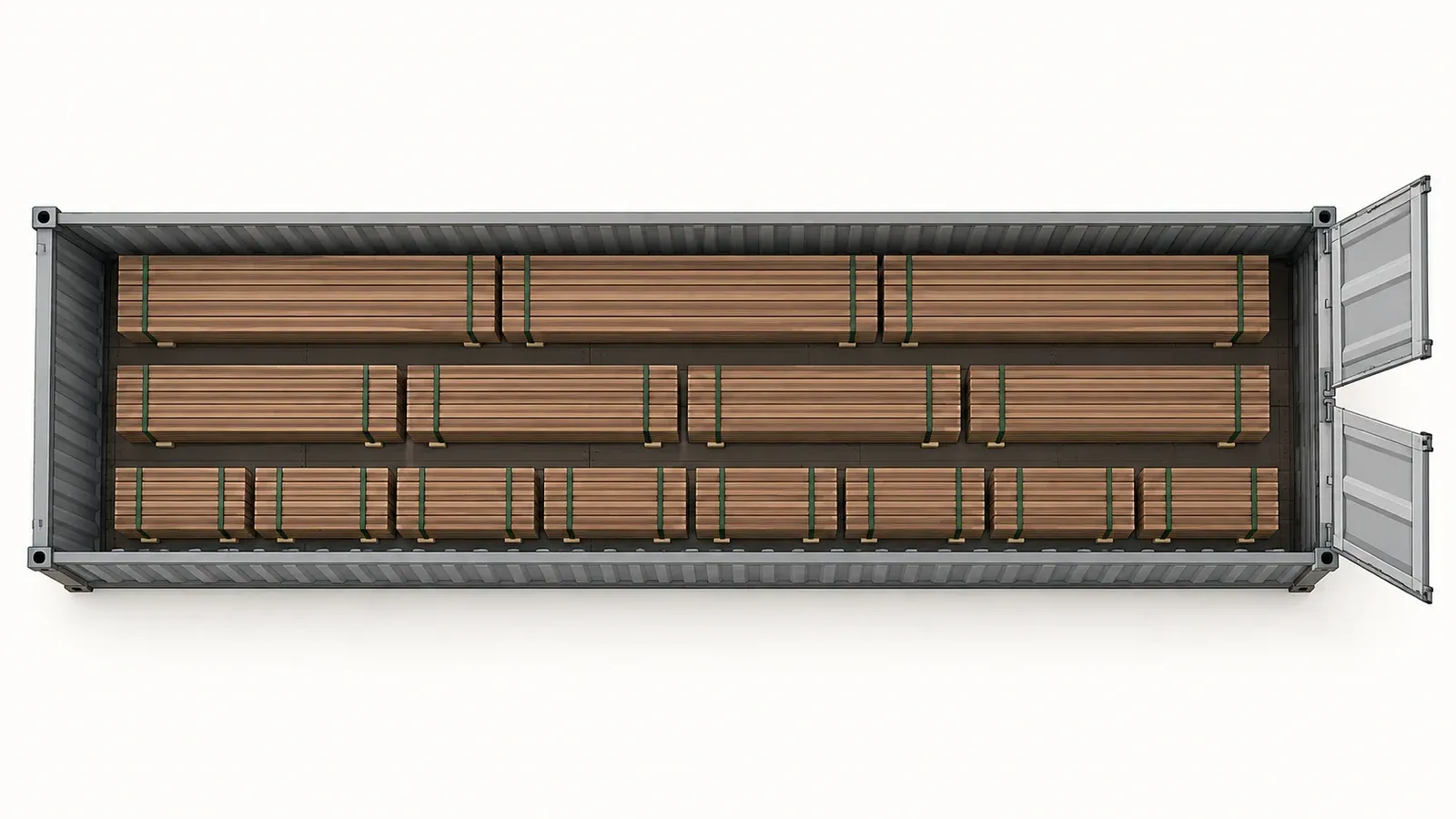
Matching board lengths to the container avoids wasted space.
Palletised or Loose Loading?
| Palletised | Loose (bundles loaded by hand) | |
|---|---|---|
| Loading and unloading | Fast, with a forklift | Slower, needs labour |
| Space used | Pallets take some space and weight | Uses space more fully |
| Damage risk | Lower; bundles stay together | Higher if not loaded carefully |
| Best for | Distributors with forklifts | Buyers who unload by hand and want maximum quantity |
Wooden pallets usually need ISPM 15 heat treatment and marking for export. Plastic or composite pallets avoid this.
Loading Tips That Prevent Damage
- Prefer full containers. Shared (LCL) cargo is moved and reloaded several times, and that extra handling causes most transport damage.
- Spread the weight evenly along the floor, heavier bundles at the bottom.
- Use corner protection and strapping on every bundle.
- Fill gaps with airbags so pallets cannot slide at sea.
- Protect the surface. Film or paper between layers prevents scuffing on capped boards.
- Ask for loading photos: empty container, half loaded, fully loaded with doors open, and the seal number.
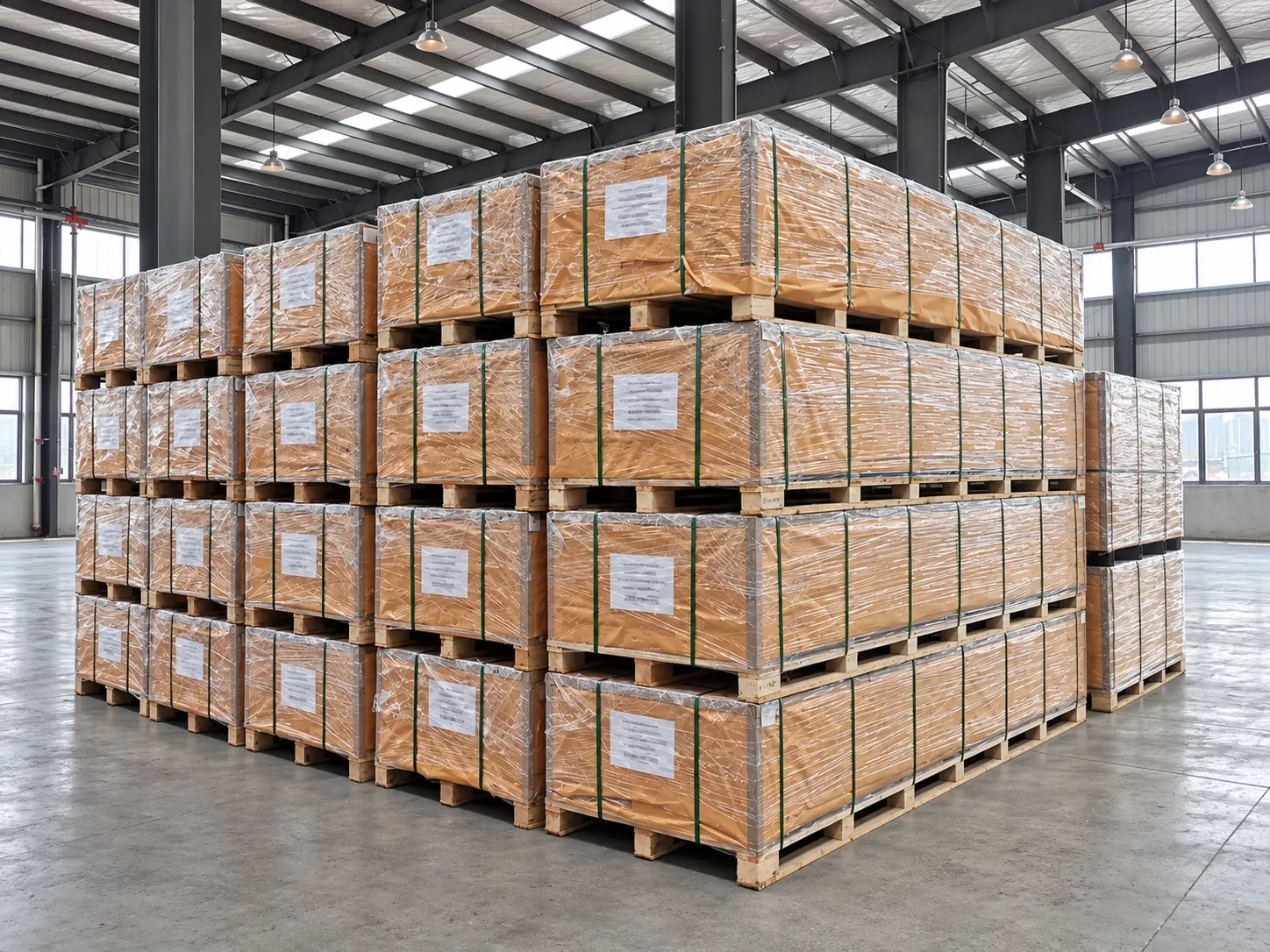
Airbags and corner protection stop pallets moving during the voyage.
Documents and Weight Declarations
International shipping rules require the shipper to declare the verified gross mass (VGM) of every packed container before loading on the ship. Your supplier or forwarder handles this, but make sure the packing list, invoice and VGM all match. Mismatched weights are a common cause of delays at the port.
Frequently Asked Questions
How much composite decking fits in a 40HQ container?
It depends on the board weight and the cargo limit. In our example of 140 × 25 mm hollow boards at 2.4 kg/m and a 24-tonne limit, about 10,000 linear metres, or roughly 1,450 m² of deck.
Is a 20GP or 40HQ better for WPC decking?
For light hollow boards, a 40HQ carries more. For heavy solid boards, a 20GP can carry almost as much as a 40HQ because both reach the weight limit, and it usually costs less to ship.
Why does my supplier say the container is full when there is space left?
Because WPC is heavy. The container has reached its safe or legal weight limit, even though space remains.
Can I mix decking, fencing and accessories in one container?
Yes. Mixed containers are common and help use space well, as long as the total weight stays within the limit.
What board length is best for shipping?
Lengths that divide well into the container, such as 2.9 m, 3.6 m, 5.4 m and 5.8 m, usually load most efficiently.
Plan Your Container With Us
Send us your product list and destination, and we will prepare a loading plan showing metres, square metres and weight for a 20GP or 40HQ.