
How to Import WPC Decking from China: Step-by-Step
Quick answer: Importing WPC decking from China takes ten steps: check your local rules and duties, define the product, shortlist and vet factories, test samples, agree the price and Incoterm, agree payment terms, plan production around lead times, inspect before loading, ship and clear customs, then receive and store the goods properly. Most first orders take three to five months from first enquiry to boards in your warehouse.
China makes a large share of the world’s wood-plastic composite decking, and buying direct from a factory can cut out one or two layers of margin. But for a first-time importer, the process can feel like a black box: who to trust, how to pay, what can go wrong at the port.
This guide explains the process step by step, from the factory side of the table. Our founder has spent more than 13 years exporting building materials to over 60 countries, and in that time we have seen what makes a first order go smoothly and what makes it go wrong.
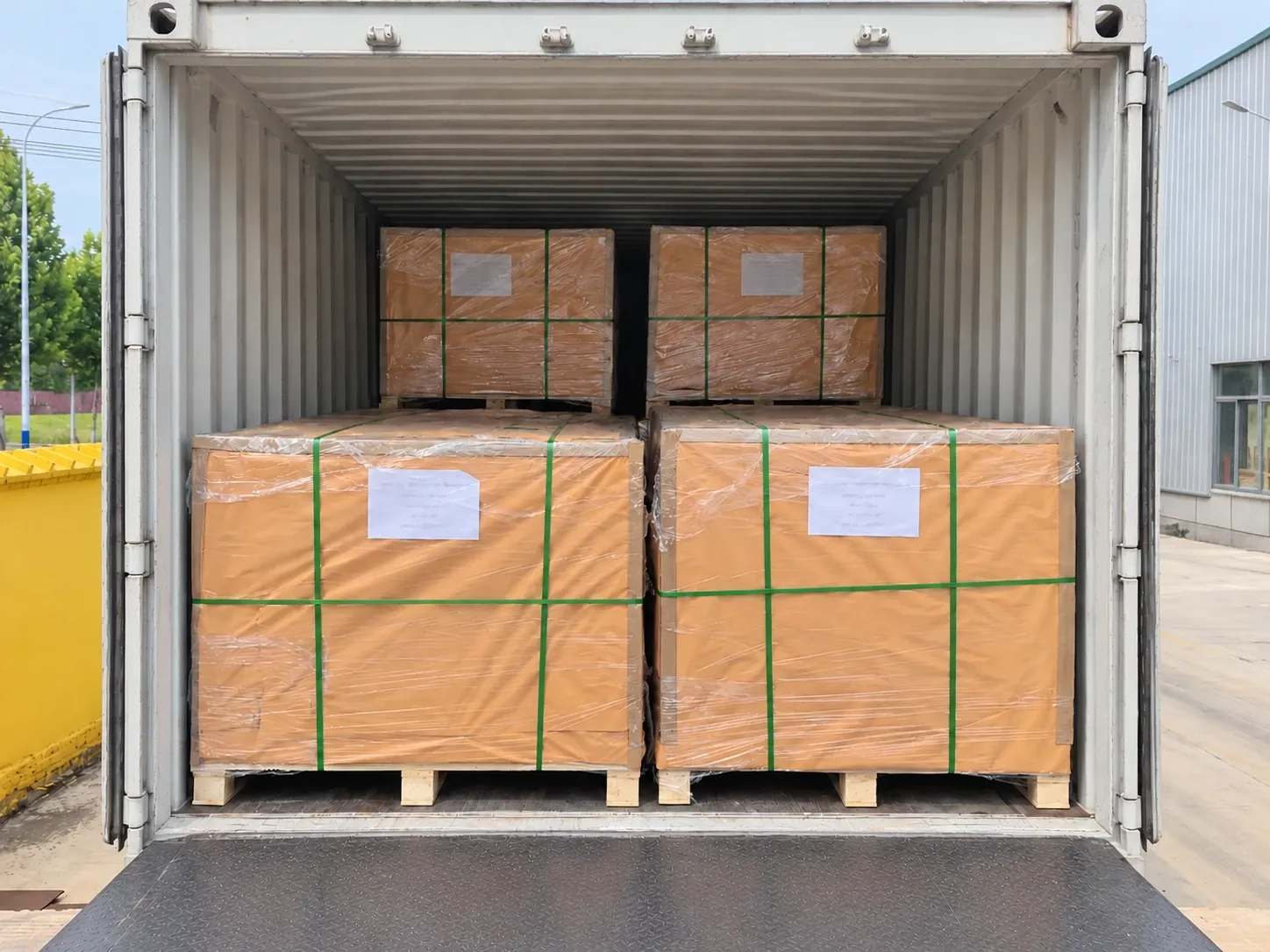
A first import order goes smoothly when every step is agreed in writing before production.
Step 1: Check Your Own Market First
Before you contact a single supplier, find out what your market requires. Rules differ by country, and your local authorities and customs broker are the final word.
- Import registration or licence. Some countries need a licence or importer registration for building materials. Your local commerce or trade department can confirm the process and how long it takes.
- Duties and taxes. Your customs broker will confirm the HS code for your product and the duty rate. WPC decking can be classified differently from one market to another, and trade measures on Chinese goods change, so check current rates before you calculate a landed price.
- Product standards. In Europe, buyers often ask for testing to EN 15534. In North America, ASTM D7032 is the common reference. Some projects also need fire-performance or slip-resistance results.
- Local building rules. Balconies, public spaces and decks near buildings may have extra rules on fire, load and guarding.
Knowing these answers early lets you ask suppliers for the right documents from the start.
Step 2: Define What You Want to Buy
Suppliers can only quote accurately when you are specific. Prepare a short specification:
- Product type: capped or uncapped, hollow or solid (see our buying guide)
- Sizes: width, thickness and lengths
- Colours and finishes: start with three to five colours rather than ten
- Accessories: clips, screws, edge and fascia boards, end caps, joists
- Packaging: pallet or bundle, branding, labels and barcodes, private label or factory brand
- Quantity: a full 20 ft or 40 ft container, or a smaller trial
If you are not sure yet, describe the project or the customers you sell to. A good supplier will suggest a sensible starting range rather than the longest price list.
Step 3: Shortlist and Vet Your Suppliers
Search engines, trade platforms, trade fairs such as the Canton Fair, and recommendations from other importers will give you a long list quickly. Narrowing it down is the real work.
Factory or trading company? Both can be good partners. A factory controls the formula and production. A trading company can combine products from several factories. What matters is that you know which one you are dealing with, and who controls quality.
Questions to ask every supplier:
- How long have you been making WPC, and how many production lines do you run?
- Which markets do you export to, and can you share references?
- Which test reports do you have, from which labs, and for which models?
- How do you check quality on each production batch?
- What does your warranty cover, and can I see it in writing?
- What are your lead times in peak and off-peak seasons?
Be careful with prices far below the rest. The easiest way to cut WPC cost is to change the formula: more filler, lower-grade plastic, fewer UV stabilisers. The board looks the same on delivery and fails a few years later.
See the factory. A visit is ideal. If you cannot travel, ask for a live video tour that covers raw materials, extrusion lines, the lab and the warehouse. You can learn about our own production on the manufacturing and quality page.
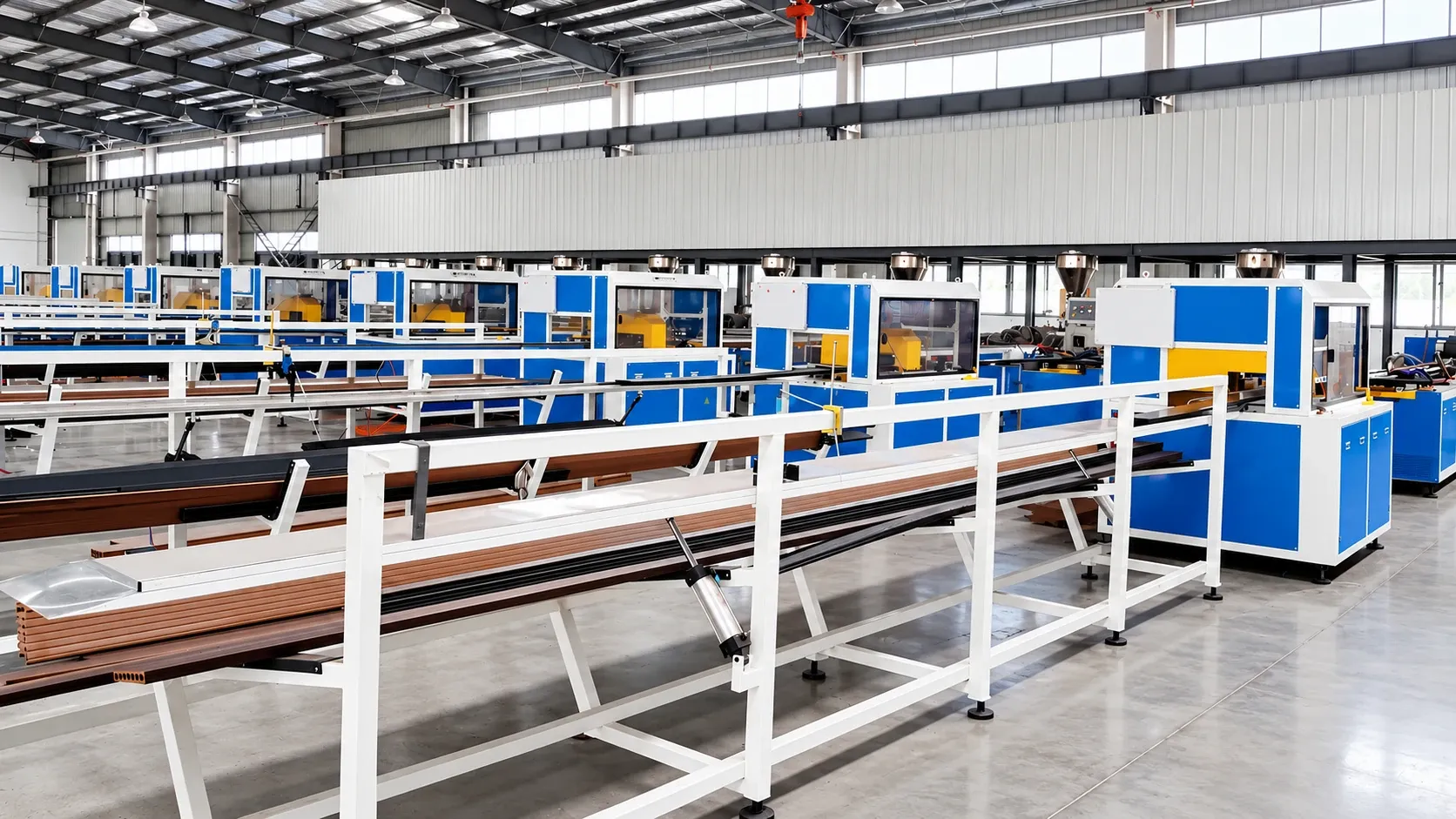
Ask to see the production lines, lab and warehouse, in person or on a live video call.
Step 4: Order and Test Samples
Samples let you check colour, finish and build quality before any money is committed to production.
- Ask for samples of the exact product, not a similar one, including accessories.
- Expect to pay the courier cost. Many factories send samples free of charge while the buyer covers express freight, and some deduct that freight from the first order.
- Cut a sample. The core should be dense, with no bubbles or cracks, and the cap layer on capped boards should be even and well bonded.
- Look at colours outdoors and keep one set of approved samples. They become the reference for production.

Approved samples become the reference for production colour and quality.
Step 5: Agree Price and Incoterms
The Incoterm decides who pays for and manages each part of the journey. It changes the price you are quoted, so always compare quotes on the same basis.
| Incoterm | Supplier handles | You handle | Good for |
|---|---|---|---|
| EXW (Ex Works) | Goods ready at the factory | Everything from the factory gate | Experienced importers with a forwarder in China |
| FOB (Free on Board) | Inland transport and export clearance to the ship | Ocean freight, insurance, import clearance, delivery | Importers with their own forwarder |
| CIF (Cost, Insurance and Freight) | Above, plus ocean freight and insurance to your port | Import clearance, duties, local delivery | Importers who want the supplier to book shipping |
| DDP (Delivered Duty Paid) | Everything, including import duties, to your address | Unloading | First-time importers who want one landed price |
For a first order, DDP or CIF keeps things simple. As you grow, FOB with your own forwarder often gives more control over freight cost and timing.
Step 6: Agree Payment Terms
The most common terms for WPC orders are bank transfer (T/T) with a deposit and a balance:
- Deposit before production, commonly 30–50%. The factory uses it to buy raw materials and book the production line.
- Balance before loading, or against a copy of the bill of lading once the goods are on the ship.
Larger orders sometimes use a letter of credit (L/C), which adds bank fees and paperwork but more formal protection. Whatever you agree, put it in the proforma invoice or contract together with the specification, approved samples, packing, delivery date and warranty.
Step 7: Plan Around Lead Times
Lead time is where first-time importers are most often caught out. A realistic timeline:
| Stage | Typical time |
|---|---|
| Samples and decision | 2–4 weeks |
| Production | 3–6 weeks off-peak; longer in peak season |
| Booking and loading | About 1 week |
| Ocean transit | Roughly 2–7 weeks, depending on destination |
| Customs and local delivery | 1–2 weeks |
Two dates matter every year. Chinese New Year (late January or February) stops most factories for two to four weeks. And spring stock orders from Europe and North America fill production lines from autumn onwards. If you want boards in your warehouse for April, place the order by late autumn or early winter.
Order changes are expensive once production starts, because raw materials are already prepared and the line is scheduled. Confirm colours, sizes and quantities before you pay the deposit.
Step 8: Inspect Before the Goods Leave China
Never let the balance payment be the first time you see the finished goods.
- Ask for photos and videos of the finished boards, packed pallets and loading.
- Use a third-party inspection company for larger orders. They check quantity, dimensions, colour against the approved sample, and packing.
- Prefer a full container. In shared (LCL) shipments, pallets are moved and reloaded several times, and most transport damage we see comes from this extra handling. In a full container, pallets go straight from our warehouse to yours.
- Check the packing. Corner protection, strapping and airbags between pallets reduce movement at sea.
- Check the pallets. Wooden pallets normally need ISPM 15 heat treatment and marking; plastic or composite pallets avoid the issue.
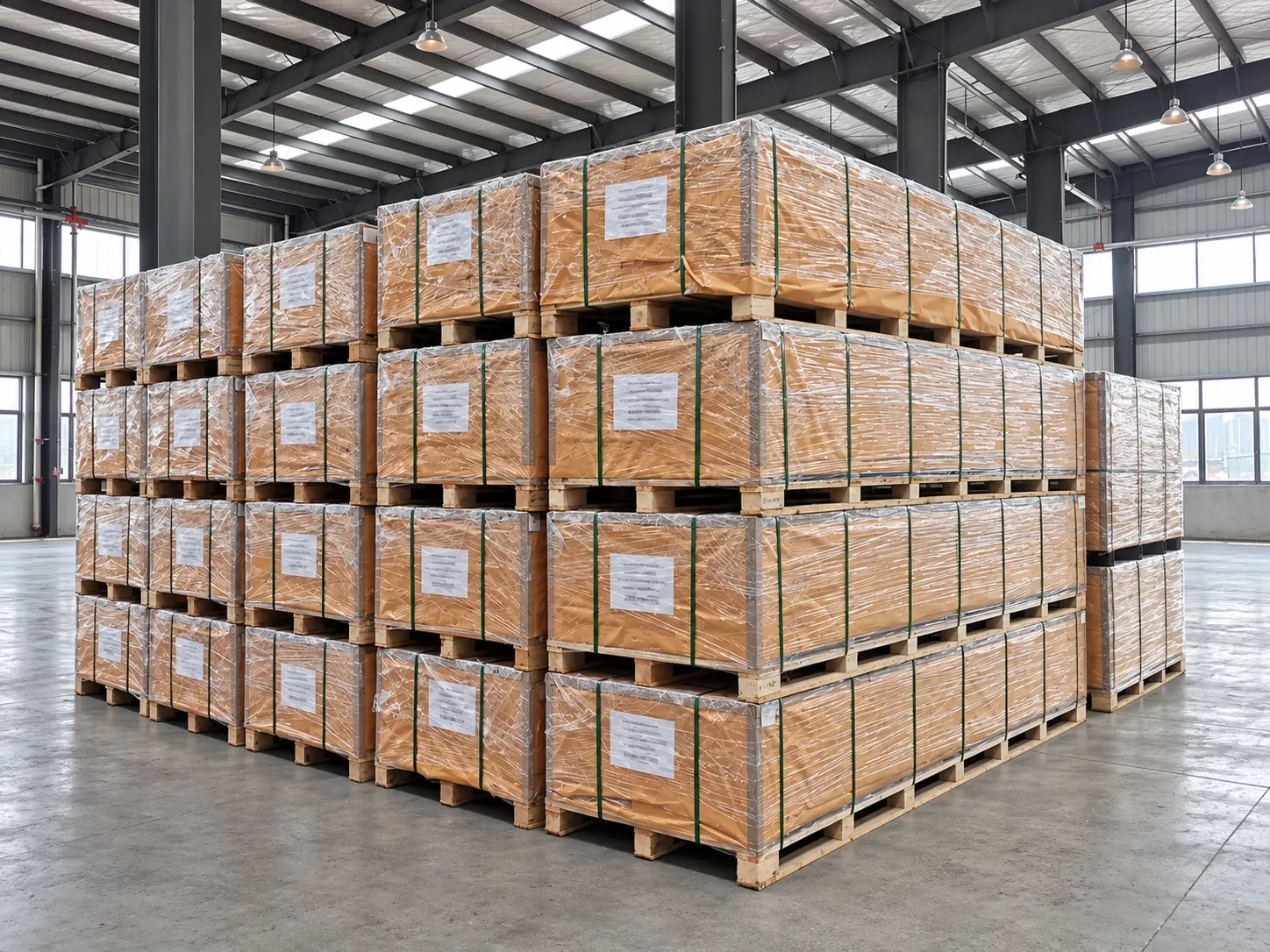
Good packing and a full container are the best protection against transport damage.
Step 9: Shipping and Customs Clearance
Your supplier or forwarder will send the shipping documents. The usual set is:
- Commercial invoice
- Packing list
- Bill of lading
- Certificate of origin (needed for some preferential duty rates)
- Test reports or product declarations, if your market asks for them
Your customs broker uses these to declare the goods, pay duties and taxes, and release the container. Send the documents to your broker as soon as you receive them; most delays at the port come from paperwork that arrives late or does not match.
Step 10: Receive, Check and Store
When the container arrives, count the pallets, photograph any damage before signing, and check a sample of boards against your approved samples. Report any problem to the supplier in writing, with photos, straight away.
Store composite boards flat on a level surface, supported at regular intervals, and covered from direct sun and rain until installation. Boards stored on uneven ground can bend.
What Your Landed Cost Includes
| Cost item | Who usually pays under FOB |
|---|---|
| Product price | Included in the quote |
| Inland transport and export clearance in China | Supplier |
| Ocean freight and insurance | You |
| Import duty and taxes | You |
| Customs broker fees and port charges | You |
| Delivery from port to warehouse | You |
| Inspection fees (if used) | You |
Divide the total by the square metres or linear metres you receive to get your true cost per unit. That is the number to compare with local suppliers, not the factory price alone.
Distributor or Exclusive Agent?
Many importers ask early about exclusivity. The difference is simple:
- A distributor buys and resells the products. A factory may have several distributors in one country.
- An exclusive agent is the only seller in an agreed area, which means the factory gives up other sales there. In return, exclusive agreements usually include a minimum yearly purchase volume.
For a new importer, starting as a distributor and growing into an exclusive arrangement once sales are proven is usually the most realistic path for both sides.
Common First-Order Mistakes
- Comparing quotes on different Incoterms or specifications.
- Ordering too many colours in the first container, leaving slow stock.
- Skipping samples or inspection to save a week.
- Forgetting accessories. Boards without matching clips, edge boards and fascia are hard to sell.
- Ordering too late for the season. Boards that arrive in July miss half the market.
Frequently Asked Questions
What is the minimum order for WPC decking from China?
It depends on the factory. Many prefer a full 20 ft or 40 ft container, and some accept smaller mixed orders for a first trial. Ask about minimums per colour as well as per order.
How long does it take to import composite decking from China?
From first enquiry to delivery, a first order usually takes three to five months, including samples, production and shipping. Repeat orders are faster because samples and specifications are already agreed.
Should I choose FOB or DDP?
DDP gives you one landed price and is easiest for a first order. FOB gives you more control over freight cost and timing once you have a reliable forwarder.
Do I need to visit the factory before ordering?
It is the best way to judge a supplier, but not essential. A detailed live video tour, references from other buyers and third-party test reports can give you much of the same confidence.
What documents do I need to import WPC decking?
Usually a commercial invoice, packing list and bill of lading, plus a certificate of origin and test reports where your market requires them. Your customs broker will confirm the exact list.
Planning Your First Container?
We work with importers, distributors and contractors who are buying WPC from China for the first time, and we are happy to explain each step for your market.
- Request factory pricing with your sizes, colours and destination port.
- Explore our composite decking, fencing and accessories to plan a full range.