
FOB vs CIF vs DDP for Building Material Importers
Quick answer: Under FOB, the supplier delivers the goods onto the ship in China and you arrange and pay for everything after that. Under CIF, the supplier also pays ocean freight and basic insurance to your port, but risk still passes to you when the goods are loaded in China. Under DDP, the supplier delivers to your address with import duties and taxes paid. FOB gives you most control over freight, CIF is a simple middle ground, and DDP gives you one landed price but needs careful checking of who acts as importer.
When you ask a Chinese factory for a price, the first reply is often a question back: “FOB or CIF? Or do you need DDP?” The answer changes the number on the quote, who manages each part of the journey, who carries the risk if something goes wrong, and which costs still arrive later on your own invoice.
This guide explains the three most common Incoterms for building materials such as composite decking, fencing and cladding, using the current Incoterms® 2020 rules. For the full import process, see How to Import WPC Decking from China.
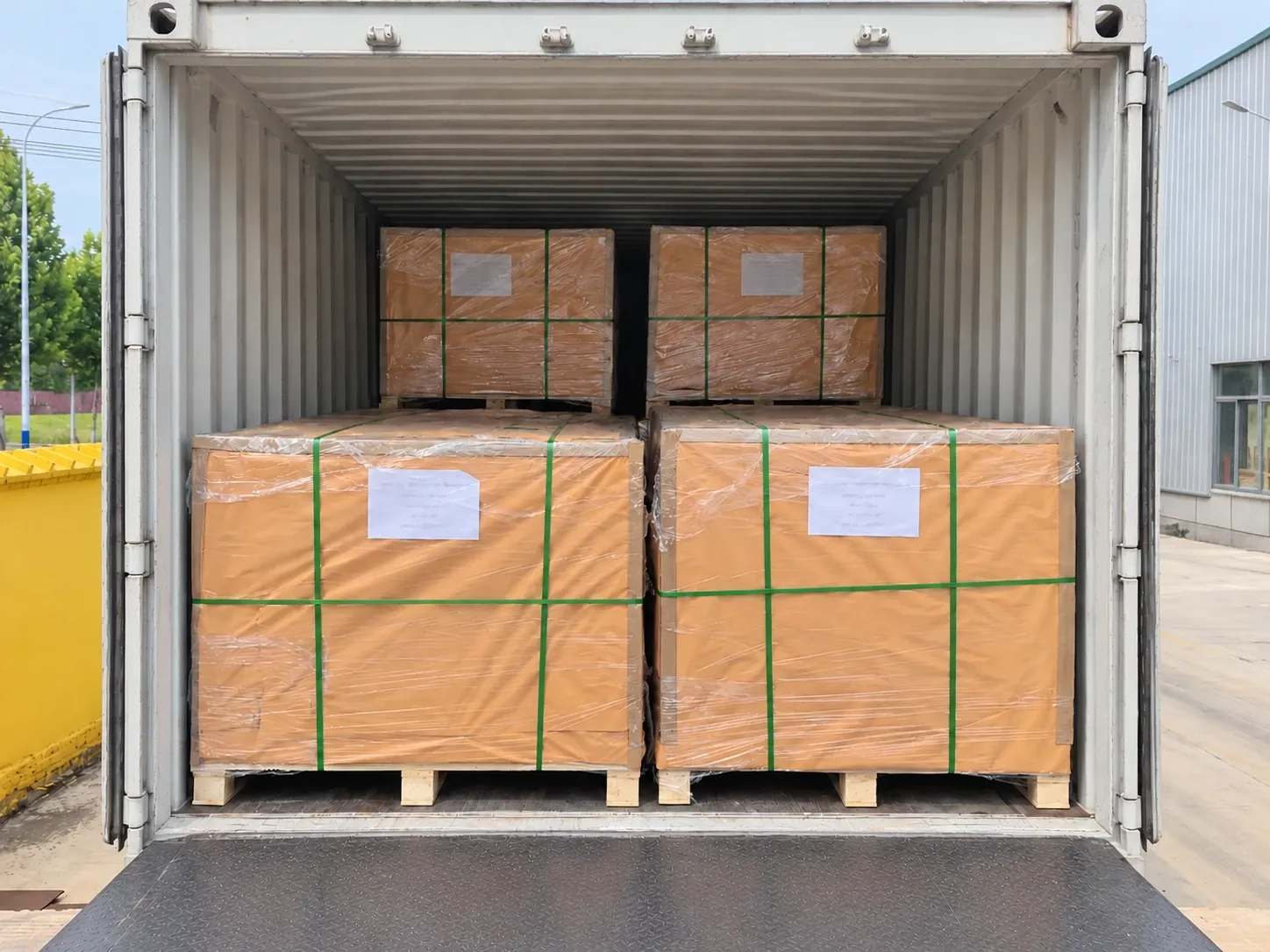
The Incoterm decides who pays and who carries the risk at each step of the journey.
The Journey, Step by Step
Every export shipment goes through the same stages. The Incoterm simply decides who handles each one.
- Packing and loading at the factory
- Inland transport to the port in China
- Export customs clearance in China
- Port handling and loading onto the ship
- Ocean freight
- Cargo insurance
- Unloading and handling at the destination port
- Import customs clearance, duties and taxes
- Delivery to your warehouse or site
- Unloading at your premises
Who Pays for What
| Stage | FOB | CIF | DDP |
|---|---|---|---|
| Packing and loading at factory | Supplier | Supplier | Supplier |
| Inland transport in China | Supplier | Supplier | Supplier |
| Export clearance in China | Supplier | Supplier | Supplier |
| Loading onto the ship | Supplier | Supplier | Supplier |
| Ocean freight | Buyer | Supplier | Supplier |
| Cargo insurance | Buyer (optional, recommended) | Supplier (minimum cover) | Supplier |
| Destination port charges | Buyer | Buyer (usually) | Supplier |
| Import clearance, duties and taxes | Buyer | Buyer | Supplier |
| Delivery to your address | Buyer | Buyer | Supplier |
| Unloading at your address | Buyer | Buyer | Buyer |
| Risk passes to buyer | When goods are on board in China | When goods are on board in China | When goods arrive at your address, ready to unload |
FOB (Free on Board)
How it works. The supplier delivers the goods, cleared for export, onto the ship you have booked at the named Chinese port, such as FOB Shanghai or FOB Ningbo. From then on, you pay and manage everything.
Advantages
- You choose the forwarder and shipping line and can compare freight prices
- Clear view of each cost
- Usually the best value for experienced importers with a regular forwarder
Watch out for
- You need a forwarder who works in China and at your destination
- Destination charges, duties and delivery still need to be budgeted
- Arrange cargo insurance yourself; FOB does not include it
CIF (Cost, Insurance and Freight)
How it works. The supplier pays ocean freight and minimum cargo insurance to your destination port, such as CIF Hamburg or CIF Los Angeles. But risk passes to you as soon as the goods are loaded on board in China, just as under FOB.
Advantages
- Simple: the supplier books the ship
- Easy price comparison with local suppliers at port level
- Useful for importers without their own forwarder in China
Watch out for
- Destination charges. Port handling and documentation fees at your port can be significant and are usually paid by you.
- Minimum insurance. Incoterms 2020 only requires basic cover under CIF. Check what the policy covers, or buy broader cover yourself.
- Less control over shipping line, transit time and freight cost.
DDP (Delivered Duty Paid)
How it works. The supplier delivers to your named address with all transport, import clearance, duties and taxes paid. You only unload.
Advantages
- One landed price, which makes budgeting and price comparison easy
- Very little paperwork for you
- Popular with first-time importers, contractors and smaller distributors
Watch out for
- Who is the importer of record? Under DDP, the seller is responsible for import clearance. In many countries, a foreign seller needs a local registration or an agent to do this. Ask who will act as importer of record and confirm it is done properly and legally.
- Correct customs declarations. Make sure the goods are declared with the correct HS code and value. Under-declared shipments can be delayed, fined or seized, and problems can still reach you as the receiver.
- Import VAT or sales tax. In some markets, such as the EU, VAT paid by a foreign seller under DDP may not be recoverable by you as a business. A DAP arrangement, where you pay import taxes yourself, can be better for VAT-registered buyers.
- Less visibility of each cost inside the price.
What About EXW, CFR and DAP?
- EXW (Ex Works): you collect from the factory and handle everything, including Chinese export clearance. Rarely the best choice unless your forwarder in China is very experienced.
- CFR (Cost and Freight): like CIF but without insurance.
- DAP (Delivered at Place): the supplier delivers to your address, but you pay import duties and taxes. A good option for VAT-registered businesses that want door delivery.
How to Compare Quotes Fairly
- Use the same Incoterm for all quotes, or convert them to the same basis.
- Use the same specification: sizes, colours, quantity and packing.
- List the costs each term leaves to you, such as freight, insurance, destination charges, duties, broker fees and delivery.
- Compare the landed cost per square metre, not the factory price.
Container planning has a big effect on landed cost. See How Many Boards Fit in a 40HQ? for a worked example.
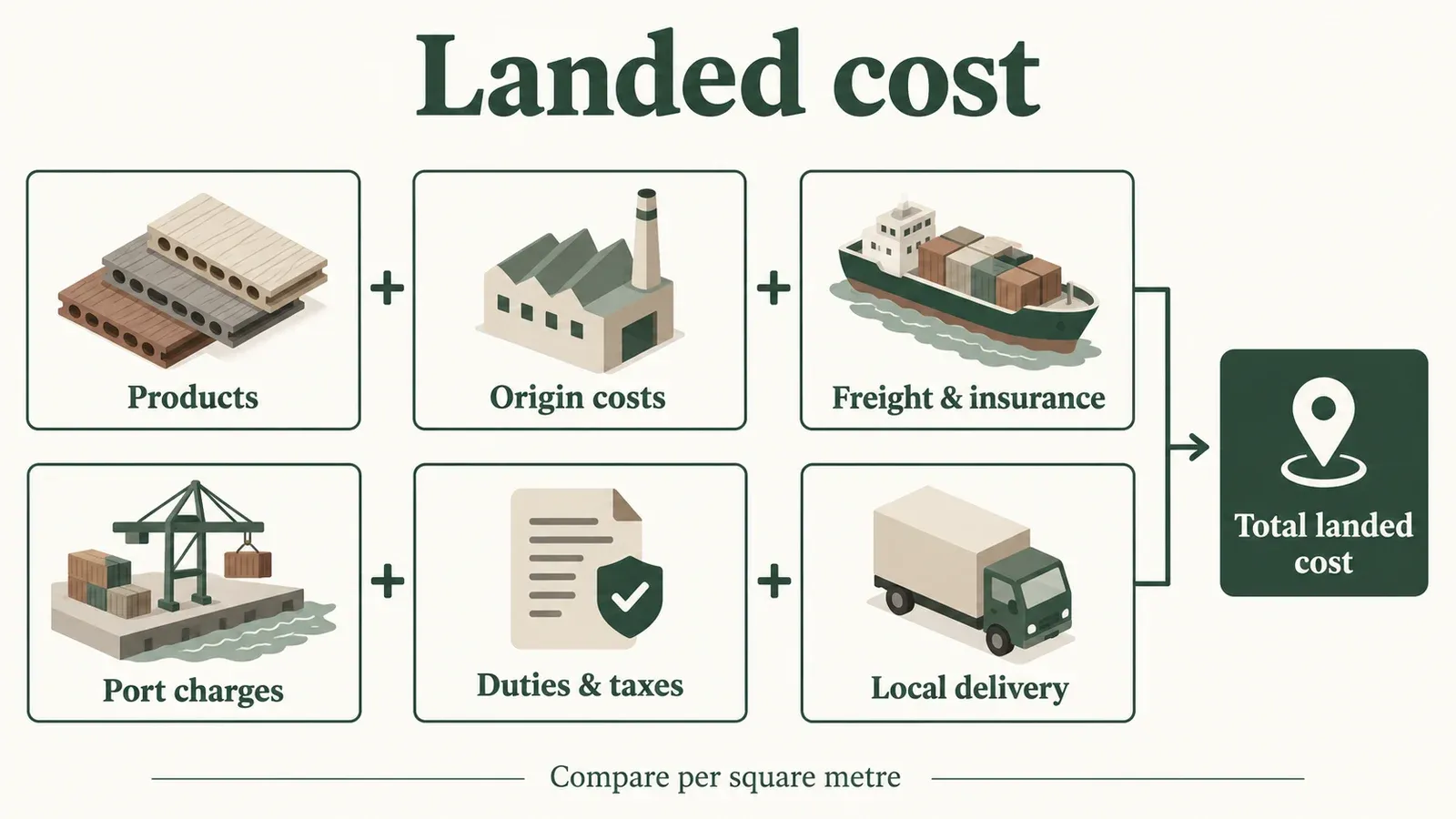
Compare the full landed cost per square metre, not just the factory price.
Which Incoterm Should You Choose?
| Your situation | Usually best |
|---|---|
| First import, want one simple price | DDP, if importer of record and taxes are handled properly |
| VAT-registered business, want door delivery | DAP |
| Want the supplier to book shipping, you handle import | CIF or CFR |
| Experienced importer with your own forwarder | FOB |
| Regular volumes and want maximum control | FOB |
Many importers start with DDP or CIF for the first container, then move to FOB once they have a reliable forwarder and know their costs.
Frequently Asked Questions
What is the difference between FOB and DDP?
Under FOB, the supplier’s responsibility ends when the goods are loaded on the ship in China. Under DDP, the supplier delivers to your door with import duties and taxes paid.
Is CIF or FOB better for importers?
FOB gives you more control over freight cost and timing. CIF is simpler if you do not have a forwarder, but you usually pay destination charges and should check the insurance cover.
When does risk pass under CIF?
When the goods are loaded on board the ship at the port of shipment in China, even though the supplier pays freight to your port.
Is DDP more expensive than FOB?
The DDP price is higher because it includes freight, duties and delivery. The total cost is not necessarily higher; compare the full landed cost of both.
Which Incoterms version should I use?
Incoterms® 2020 is the current version. Name it in your contract, for example “FOB Shanghai Incoterms® 2020”.
Get a Quote on the Terms You Need
We quote FOB, CIF and delivered terms for composite decking, fencing and cladding, depending on the destination.
- Request a quote with your destination port or delivery address.
- Read Composite Decking MOQ, Lead Time & Payment Terms